

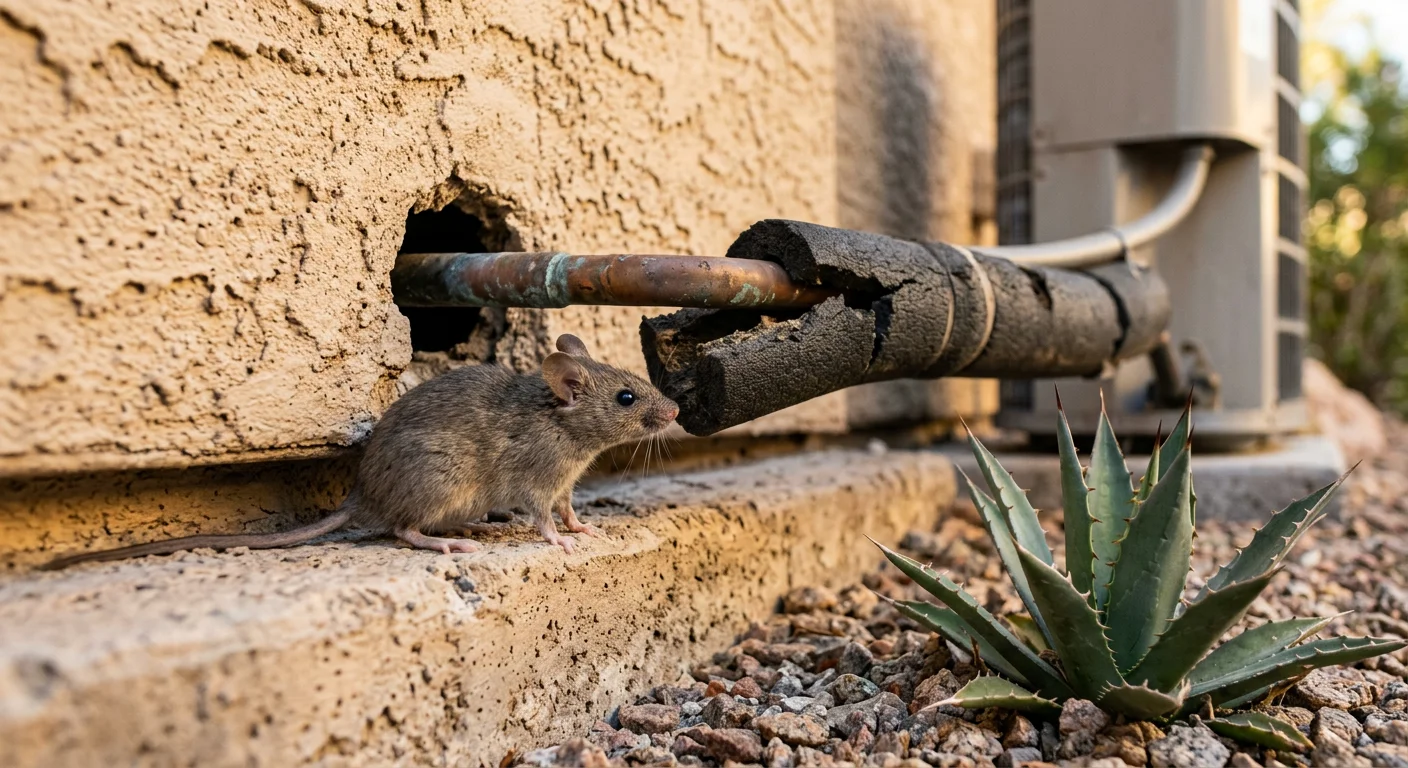
Rodent calls in Las Vegas start climbing every year once nighttime temperatures drop in fall. Mice or roof rats that spent summer comfortable outdoors suddenly need somewhere warmer, and a house with even a small gap is a much better option than a block wall or patch of desert landscaping.
Roof Rats and Palm Trees
Roof rats are common in established neighborhoods with mature palm trees, since dense fronds provide both cover and a direct path onto rooflines. If you've got palms close to your house, trim them back from the roofline before fall.
How Little Space Mice Actually Need
A gap around a quarter-inch wide is enough for a house mouse — meaning utility penetrations, gaps around AC lines, and space under garage doors are realistic entry points, not just obvious damage.
What to Check Before It Gets Colder
- Garage door seals, especially at the corners, where wear is common and often invisible
- Gaps around plumbing, electrical, or AC line penetrations, frequently left unsealed even on newer homes
- Attic vents, to confirm screens are intact and not torn
- Woodpiles or storage stacked against the exterior wall, which give rodents cover and a launching point
Signs You Already Have Activity
Scratching sounds in walls or the attic at night, small dark droppings near baseboards or in cabinets, and a stale, musky smell in enclosed spaces like closets or under sinks.
The Next Step
Catching it early with one or two entry points and no established nest makes sealing and exclusion straightforward. Call (888) 296-4183 or schedule your free inspection before demand picks up across the valley.